

Spangmik Village
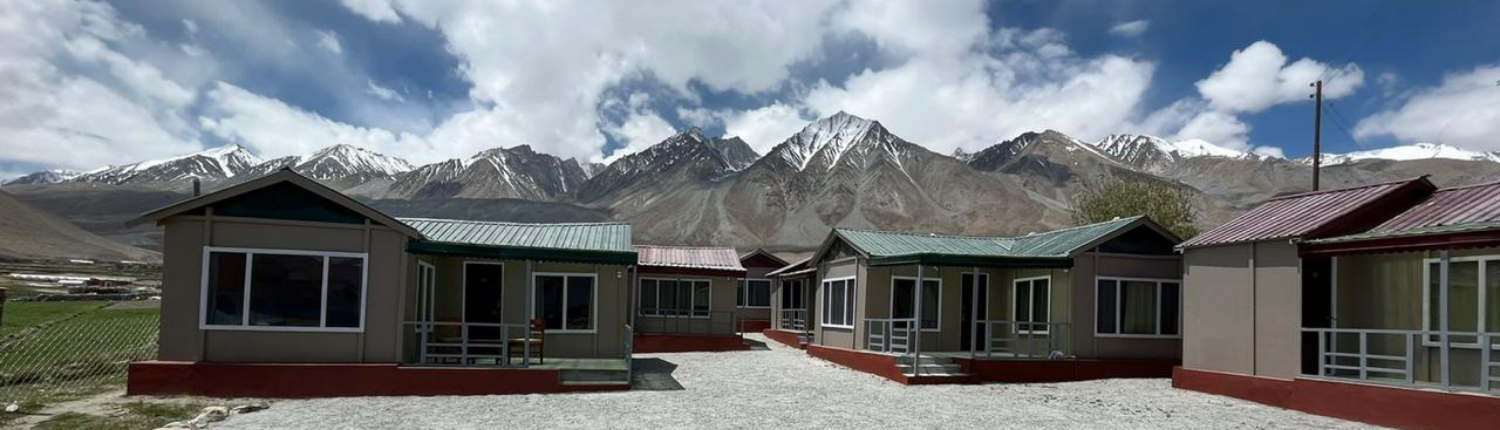
Sitting a mere 10 kilometres down the road, Spangmik Village acts as the vibrant heartbeat of tourism along the western shoreline of Pangong Lake. This stunning hamlet is uniquely wedged into a narrow strip of pastoral land, beautifully framed by the towering Chang Chenmo mountain range on one side and the crystal-clear, morphing blue waters of the lake on the other. While Maan Village offers quiet relaxation, Spangmik provides a lively contrast where travellers can browse local handicraft stalls, interact with welcoming Ladakhi villagers, and sample traditional hot noodle soups. It serves as the primary base for luxury glamping sites and modern eco-cottages. The shallow, pebble-lined shores here are highly popular for morning photography walks, capturing the iconic reflections of the sun rising over the distant glaciated peaks.
Merak Village
Venturing 18 kilometres east from Maan brings you to Merak Village, a beautifully preserved frontier settlement that offers a pristine glimpse into the untouched lifestyle of the Changthang region. Because it sits much further along the remote Indian shoreline, the massive tourist crowds rarely venture this deep, leaving the vast landscape incredibly quiet and tranquil. The village itself is characterized by charming, traditional whitewashed stone houses accented with bright wooden window frames and fluttering Buddhist prayer flags. Herds of long-tailed yaks and valuable Pashmina goats roam the adjacent green wetlands against a backdrop of deep blue water. It is an exceptional destination for travellers seeking absolute solitude, authentic homestays run by native herdsmen, and an environment completely free from light pollution.
Tangste Village
Located roughly 50 kilometres away, Tangste Village serves as the essential strategic and administrative gateway for everyone travelling into the Pangong basin. The village is famously recognized for the historic Tangste Monastery, a centuries-old Buddhist shrine that sits perched dramatically atop a rocky, jagged hill overlooking the river valley. For travellers staying at the lake, Tangste is an invaluable location because it houses the nearest functional medical clinic, basic mechanical repair shops, currency facilities, and small winterized guest houses. The surrounding valley meadows are also a premier wildlife spotting zone. Travellers frequently pause along the roadside fields just outside the village to watch the highly expressive, furry Himalayan Marmots pop out of their underground burrows to sunbathe.
Chang La Pass
Perched at a dizzying elevation of 5,360 metres above sea level, Chang La Pass rests 75 kilometres away and stands as the dramatic, high-altitude mountain gateway that connects Leh to Pangong Lake. The steep, winding asphalt road leading up to the summit rewards drivers with sweeping, panoramic vistas over the snow-dusted ridges of the Ladakh Range. The pass features a small, active military post, a revered Buddhist temple covered in hundreds of colorful prayer flags, and a basic medical aid station equipped to assist travellers experiencing sudden altitude sickness. The weather here remains fiercely unpredictable, with sub-zero winds blowing across the rocky ridge even at the height of summer. It serves as a thrilling, unforgettable milestone for motorbikers and road-trippers conquering the classic Ladakhi circuit.
Extended Journeys: Attractions Within 400 Kilometres
These destinations are further away, crossing major mountain passes and requiring dedicated overnight stays rather than single-day excursions.
These destinations are significantly further away, crossing major mountain passes and requiring dedicated overnight stays rather than single-day excursions. Navigating the vast distances of Ladakh requires careful logistical planning, as high-altitude road conditions can change rapidly and driving times are often much longer than they appear on a map. Traveling to these outer zones means ascending steep alpine switchbacks, passing through intense military checkpoints, and experiencing starkly changing microclimates. Rather than rushing through these long journeys, travellers are highly encouraged to split their trips, booking overnight stays in local homestays or eco-lodges along the way. This slower approach ensures a safer drive, proper altitude acclimatization, and ample time to truly absorb the dramatic, raw beauty of the trans-Himalayan frontier.
Leh City (Palace and Stupa)
Positioned roughly 140 kilometres west of your lakeside base, Leh City is the vibrant cultural and historic capital of the Ladakh territory. The city skyline is dominated by the imposing Leh Palace, a nine-storey wood-and-stone royal fortress built in the 17th century that offers magnificent views of the Indus Valley. Nearby, the brilliant white dome of the Shanti Stupa sits atop a steep hill at Changspa, serving as a peaceful monument to world peace that glows beautifully under evening spotlights. Leh acts as the main base for travellers to rest, purchase local apricot jams, buy hand-woven rugs, and acclimatize before heading back out into the remote wilderness.
Hanle Village
Situated 160 kilometres south along a remote border corridor, Hanle Village is a mesmerizing, high-altitude desert oasis famous for its exceptionally clear skies. The village sits at an elevation of over 4,500 metres and is recognized globally as India’s premier Dark Sky Reserve, housing the sophisticated Indian Astronomical Observatory. The landscape here feels completely otherworldly, featuring vast, barren plains ringed by low mountains and ancient, hilltop monasteries. Travellers journey to this remote outpost exclusively for world-class astrophotography, experiencing jaw-dropping views of the Milky Way galaxy arching over the peaceful, sub-zero valley.
Nubra Valley
Reached via a direct 170-kilometre overland journey through the rugged Shyok River route, the breathtaking Nubra Valley provides a stark visual contrast to the deep blues of Pangong. Known historically as the “Valley of Flowers,” this unique geographical trench features a striking mix of high-altitude desert sand dunes, lush green riverside oases, and jagged mountain walls. The primary tourist hub at Hunder is famous for its rolling white sand dunes, where travellers can ride rare, double-humped Bactrian camels. The valley is also home to the colossal, 32-metre statue of Maitreya Buddha at Diskit Monastery, which looks out over the confluence of the Shyok and Nubra rivers.
Magnetic Hill
Located 170 kilometres away on the main Srinagar-Leh Highway, the mysterious Magnetic Hill is a highly popular roadside phenomenon that leaves travellers entirely spellbound. Situated at a high altitude of 4,267 metres, this specific stretch of road is globally famous for its gravity-defying optical illusion. When drivers place their vehicles in neutral inside the clearly marked yellow box on the asphalt, the car appears to automatically roll uphill against the natural pull of gravity. The surrounding slopes and unique alignment of the horizon create a brilliant spatial distortion, making it a mandatory, fun-filled photo stop for independent road-trippers and tour groups
Khardung La Pass
Resting roughly 180 kilometres away, the legendary Khardung La Pass is a world-renowned mountain pass nestled high within the rugged Ladakh Range. Reaching an impressive altitude of approximately 5,359 metres, it serves as the crucial, historic gateway connecting Leh city to the remote northern valleys. The road climbing up to the summit is widely celebrated for its intense, rocky terrain and highly dramatic weather shifts, frequently covered in thick ice and fresh snow. Despite the challenging driving conditions, it remains a bucket-list destination for adventure cyclists and international motorbiking groups who come to conquer the steep alpine climb.
Tso Moriri Lake
Tucked away 200 kilometres south across the untamed wilderness of the Changthang Plateau, Tso Moriri is a spectacular, high-altitude brackish lake that feels entirely wild. Unlike the heavily visited shores of Pangong, this remote body of water rests at a higher elevation of 4,522 metres and is protected as an environmentally sensitive wetland reserve. The deep turquoise waters are surrounded by massive, snow-capped peaks that rise past 6,000 metres, reflecting perfectly on the glassy surface. The tiny village of Karzok on its bank features one of the highest permanent settlements in India, hosting a historic monastery and nomadic tents.
Zanskar Valley
Positioned roughly 250 kilometres away, the isolated Zanskar Valley stands as the ultimate frontier for raw, heavy-duty adventure travel in the Indian Himalayas. This deeply sequestered mountain kingdom is surrounded by the towering, glaciated peaks of the Tethys Himalayas, keeping it completely cut off from modern infrastructure for centuries. Zanskar is sought out globally for its challenging multi-day alpine treks—including the iconic winter Chadar Trek over the solid ice of the frozen Zanskar River—and world-class white-water rafting. The valley features dramatic, deep-cut rock gorges, colossal slow-moving glaciers, and ancient cave monasteries like Phugtal that hang precariously from sheer cliff faces.